


Posts Tagged :

bernard metzger

PATA Annual Summit 2024 is Going to Macao

700 385 wttc2

PATA Annual Summit 2024 is Going to Macao - VISITMACAO.orgMacao, Macao SAR, November 15, 2023 / TRAVELINDEX / The Pacific Asia Travel Association (PATA) has announced that the bid for hosting the PATA Annual Summit 2024 has been awarded to the Macao Government Tourism Office. This prestigious annual event will be supported by SJM Resorts, S.A. and will be held from May 15 – 17, 2024 at the Grand Lisboa Palace Resort Macau. The event is set to bring together international thought leaders, industry shapers and senior decision-makers who are professionally engaged in driving tourism to, from and within the Asia Pacific region.

The extensive programme, comprised of plenary sessions, breakout sessions, the PATA Executive Board and Board meetings, and Annual General Meeting, will provide a platform for PATA’s public and private sector members and partners, and most importantly PATA Chapters and PATA Youth from around the world to discuss the challenges, issues and opportunities facing the industry as it looks towards the responsible and sustainable growth, value, and quality of tourism in the region.

“All of us at PATA are excited to be returning to Macao for the PATA Annual Summit 2024 and receive first-hand updates about the significant developments in the destination since having previously organising successful PATA Travel Marts in 2010 and 2017, as well as the PATA Annual Conference in 2005,” said Mr. Semone. “The Macao Government Tourism Office has been a strong partner of PATA since 1958 and they are our major sponsor for the PATA Gold Awards for the past 28 consecutive years. Next year’s event provides Macao with the perfect opportunity to showcase their destination and the Greater Bay Area to all delegates.”

Director of the Macao Government Tourism Office, Maria Helena de Senna Fernandes, said, “It is an honor for Macao to host the PATA Annual Summit 2024. PATA holds a special place in the heart of our tourism industry, and we are happy to once again be granted the opportunity to welcome delegates from near and far to meet in our city. Especially as this will be the first PATA event we host after the pandemic, allowing us to showcase to participants the current dynamic change in our destination towards more diversification for a memorable meeting in Macao.

Macao, a special administrative region of China, harmoniously blends cosmopolitan style with a rich cultural heritage. Its historic district, known as “The Historic Centre of Macao,” is home to over 20 monuments and urban squares, and was designated a UNESCO World Heritage site in 2005. This district is a testament to the unique integration of Eastern and Western cultures over centuries, offering visitors the chance to explore magnificent heritages and their fascinating stories. Macao’s cultural tapestry is a result of over four centuries of coexistence and interaction between Chinese and Western influences, culminating in a distinctive cultural landscape and a wealth of intangible cultural heritage.

Macao’s intangible cultural heritage encompasses a diverse range of practices, expressions, knowledge, and skills passed down through generations. This includes oral traditions, performing arts, social customs, rituals, and the know-how behind traditional crafts. The designation of Macao as a UNESCO Creative City of Gastronomy in 2017 adds a powerful international branding to the city’s portfolio. As of June 2020, Macao boasts a total of 70 items recorded on the Inventory of Intangible Cultural Heritage, with 12 items inscribed on the List of Intangible Cultural Heritage. Additionally, 11 items from Macao are recognized on the Representative List of National Intangible Cultural Heritage, including the likes of Cantonese Opera, Herbal Tea Brewing, Woodwork – Religious Figure Carving, and Macanese Gastronomy, showcasing the rich tapestry of traditions that make Macao a cultural crossroads.

About the Venue

The Grand Lisboa Palace Resort Macau celebrates the grand union of the best from East and West, emanating cross-cultural and legendary heritage. A property of SJM Resorts, S.A., this newest member of the widely recognised Lisboa brand sets a new standard for hospitality excellence. Situated in Cotai, Macao, the resort brings together world-class brands and distinguished styles of accommodation, gastronomy, retail, entertainment, and wellness indulgence, complemented by one-of-a-kind wedding, event and meeting venues. The Grand Lisboa Palace, uniting world-class excellence and visionary aesthetics in one integrated resort, will redefine travelling and leisure experiences, giving new meaning to what’s already legendary.

For more information, please visit www.PATA.org/pata-annual-summit-2024 or email events@PATA.org.

About PATA
Founded in 1951, the Pacific Asia Travel Association (PATA) is a not-for-profit membership association that acts as a catalyst for the responsible development of travel and tourism to, from and within the Asia Pacific region. The Association provides aligned advocacy, insightful research and innovative events to its member organisations, which includes government, state and city tourism bodies; international airlines and airports; hospitality organisations, and educational institutions, as well as thousands of young tourism professional (YTP) members across the world. The PATA network also embraces the grassroots activism of the PATA Chapters and Student Chapters, who organise numerous travel industry training programmes and business development events across the world. Thousands of travel professionals belong to the 32 local PATA Chapters worldwide, while hundreds of students are members of the 28 PATA Student Chapters globally. The PATAmPOWER platform delivers unrivalled data, forecasts and insights from the PATA Strategic Intelligence Centre to members’ desktops and mobile devices anywhere in the world. PATA’s Head Office has been in Bangkok since 1998. The Association also has an official office in Beijing.

Source

First published at TravelNewsHub.com – Global Travel News
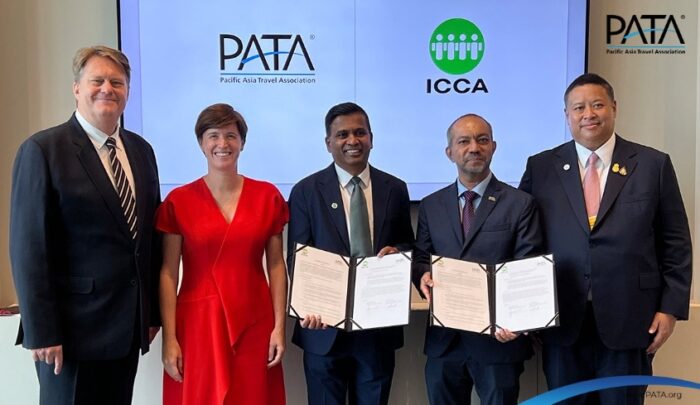
PATA signs MOU with International Congress and Convention Association (ICCA)

700 405 wttc2

PATA signs MOU with International Congress and Convention Association (ICCA) - TRAVELINDEXBangkok, Thailand, November 13, 2023 / TRAVELINDEX / The Pacific Asia Travel Association (PATA) has signed a Memorandum of Understanding (MoU) with the International Congress and Convention Association (ICCA), becoming dedicated partners in establishing meaningful connections between the two organisations.

The MOU was signed in conjunction with the 62nd ICCA Congress in Bangkok hosted by Thailand Convention and Exhibition Bureau (TCEB). This is the second time Thailand played host to the ICCA Congress, with the first time in 2007 in Pattaya. The agreement was signed on Sunday, November 12 by PATA CEO Noor Ahmad Hamid and ICCA CEO Senthil Gopinath in the presence of the President of the Thailand Convention and Exhibition Bureau (TCEB) Chiruit Isarangkun Na Ayuthaya, PATA Chair Peter Semone and ICCA President Marta Gomes, on the first day of the ICCA Congress 2023 taking place at the Queen Sirikit National Convention Center in Bangkok, Thailand.

“Our collaboration with ICCA underscores the unwavering commitment of both organizations to foster responsible and sustainable growth within the travel and tourism industry, not only in the Asia Pacific region but also on a global scale. This partnership holds great promise for the expansion of business opportunities in the region as there is important synergy between the travel and tourism industry and business events, as both relate to travel and economic impact for destination and industry players. We eagerly look forward to sharing valuable insights and best practices with them,” said PATA CEO Noor Ahmad Hamid.

Under the MOU, both parties plan to create joint programme content designed to nurture the ‘Business Travel’ sector in the Asia Pacific region, emphasise sustainability in future activities and events, and begin cross-participation in flagship events between the Associations, among other priorities.

“ICCA is proud to sign this important MoU agreement with PATA which reinforces how closely linked our organisations are. We both share values around sustainability, education, legacy, and advocating for the global significance of international collaboration and partnership. Asia Pacific is an amazing place, culturally diverse and endlessly fascinating. It offers so much to the world in terms of travel and business. Yet it is the people here that are key to developing new opportunities, and ICCA salutes the collective energy, efficiency, and boundless desire to create unique event experiences for all,” said ICCA CEO Senthil Gopinath.

ICCA is a global community and knowledge hub for the international association – and governmental – meetings industry. Founded in 1963, ICCA specialises in the international association meetings sector, offering data, education, communication channels, as well as business development and networking opportunities. Today, ICCA continues to advocate for the world of international meetings. The ICCA Association Community offers associations across the world education, connections, tools and resources to help them organise more effective and successful meetings.

About PATA
Founded in 1951, the Pacific Asia Travel Association (PATA) is a not-for-profit membership association that acts as a catalyst for the responsible development of travel and tourism to, from and within the Asia Pacific region. The Association provides aligned advocacy, insightful research and innovative events to its member organisations, which includes government, state and city tourism bodies; international airlines and airports; hospitality organisations, and educational institutions, as well as thousands of young tourism professional (YTP) members across the world. The PATA network also embraces the grassroots activism of the PATA Chapters and Student Chapters, who organise numerous travel industry training programmes and business development events across the world. Thousands of travel professionals belong to the 32 local PATA Chapters worldwide, while hundreds of students are members of the 28 PATA Student Chapters globally. The PATAmPOWER platform delivers unrivalled data, forecasts and insights from the PATA Strategic Intelligence Centre to members’ desktops and mobile devices anywhere in the world. PATA’s Head Office has been in Bangkok since 1998. The Association also has an official office in Beijing. Visit www.PATA.org.

Source

First published at TravelNewsHub.com – Global Travel News

Cut Global Emissions 7% Annually to 2030 to Maintain Paris-Agreed Global Warming Limit

700 395 wttc2

Cut Global Emissions 7% Annually to 2030 to Maintain Paris-Agreed Global Warming Limit - TRAVELINDEX - SUSTAINABLEFIRST.comGeneva, Switzerland, November 11, 2023 / TRAVELINDEX / In the lead-up to the UN’s COP28 climate conference, the world’s largest CEO-led community committed to accelerating the net-zero transition today calls on businesses and governments to further slash global carbon emissions to meet the Paris Climate Agreement goals.

According to a report by the Alliance of CEO Climate Leaders, in collaboration with the Boston Consulting Group (BCG), emissions must be cut back by 7% each year from now until 2030 to limit global warming to 1.5°C, as agreed in Paris in 2015.

“The urgency and scale of the climate crisis demand immediate and coordinated action at a global level,” said Pim Valdre, Head of Climate Ambition Initiatives at the World Economic Forum. “The cost of inaction is simply too high, and our shared responsibility is to secure a sustainable and prosperous future for all.”

The report, The State of Climate Action, says that “dramatic action” is needed to close the gap. This includes shorter-term net-zero national and corporate commitments, faster deployment and funding of green technologies, and stronger global collaboration to ensure a just transition. The report follows an open letter from more than 100 CEOs and senior executives from the Alliance to world leaders ahead of COP28 urging for a phase-out of fossil fuels and a massive scale-up of renewable energy and carbon removal.

“The findings in this report are a wake-up call to the world, reaffirming that the status quo is no longer an option,” said Rich Lesser, Global Chair of Boston Consulting Group and Chief Advisor to the World Economic Forum’s Alliance of CEO Climate Leaders. “Governments, companies and other stakeholders must act in lock step to meet our ambitious climate goals. It is our collective responsibility to build a more resilient and greener future for generations to come, and we are unwavering in our mission to make that a reality.”

The Alliance of CEO Climate Leaders, facilitated by the World Economic Forum, consists of more than 120 top companies from diverse industry sectors and regions, representing more than $4 trillion in total revenues and 12 million employees.

Tackling insufficient national and corporate commitments

According to the report, as of mid-2023, the share of global emissions covered by national net-zero targets exceeded 80% – up from virtually zero only a few years ago. However, only a third of global emissions are covered by net-zero targets for 2050, the estimated timeframe required to maintain a 1.5°C limit, with most national net-zero targets set for longer timelines. The shorter-term gap is even more significant, with only 20% of emissions also covered by Nationally Determined Contributions (NDCs) aligned to a 1.5°C ceiling.

Stronger commitments and actions are most critically needed from the 10 largest national emitters, which account for half of the gap.

On the corporate side, progress in recent years has been substantial. The total number of companies with commitments to 1.5°C science-based targets has increased more than six-fold between the end of 2020 and August 2023. However, fewer than 20% of the world’s 1,000 largest companies have set this type of target, and almost 40% have no net-zero commitment at all.

Addressing the technology and funding gap

Most green technologies required to achieve net zero exist already, but those that are or soon will be cost competitive would only cover around 55% of global emissions. Others, including “deep decarbonization” technologies – such as hydrogen, carbon capture, usage and storage (CCUS), and direct air capture – are still in early stages of development and scaling too slowly. To catch up, innovation and industrial scaling need to accelerate at nearly unprecedented levels.

Among key root causes, an over $2 trillion gap in yearly climate funding remained in 2022, with critical gaps in early technologies and infrastructure: bioenergy, hydrogen, sustainable aviation fuel, CCUS and battery storage collectively received only around 2% of 2022 global mitigation funds. The gap is also twice as large in lower-income countries as in higher-income ones, with the former subject to lower capital availability and higher perceived risks.

Major course corrections needed

Several near-term priorities are put forward in the report to keep the 1.5°C limit within reach. These actions include the need to:

– Unlock bolder, more rapid national commitments and actions
– Deploy carbon pricing and border taxes, and support actions in nature, agriculture and food
– Remove obstacles to the transition, such as permitting times, supply chain risks and skill gaps
– Shift corporate focus to bolder targets and transparency for themselves and their supply chains
– Strengthen incentives to massively scale up high-impact technologies and necessary infrastructure
– Raise climate financing for the Global South, conditional on ambitious mitigation action

Source

First published at TravelNewsHub.com – Global Travel News

UNWTO Ministers Summit in London – Transforming Tourism Through Education

700 431 wttc2


UNWTO Ministers Summit in London - Transforming Tourism Through Education - TRAVELINDEX - NATALIA BAYONALondon, United Kingdom, November 8, 2023 / TRAVELINDEX / UNWTO celebrated the biggest Ministers Summit on record as it brought tourism leaders together on the opening day of the World Travel Market in London to focus on education and skills development.

Welcoming a record 40 Ministers of Tourism, representing every global region and destinations of all sizes, UNWTO Executive Director Natalia Bayona underscored the vital importance of investing in education.

The Summit, hosted at WTM for the 17th time, also featured inputs from key private sector players and from co-organizer the World Travel and Tourism  Council (WTTC).

Education for a better tourism

According to UNWTO with 1.2 billion people worldwide aged between 15 to 24, tourism can establish itself as a top employer of youth and driver of youth empowerment. However., according to the Office for Economic Cooperation and Development (OECD) around 10% of that demographic are unemployed and 14% hold only basic qualifications.

Outlining how UNWTO is leading the way in promoting tourism education, Executive Director Bayona emphasised the need to support education and skills development at every stage.

  • UNWTO launched its Education Toolkit in October 2023. The landmark resource will enable countries everywhere to introduce tourism as a high school subject.
  • The Bachelors Degree in Sustainable Tourism Management offered by UNWTO and the Lucerne University of Applied Sciences and Arts will welcome its first students in 2024.
  • Currently, 30 universities worldwide contribute content to the UNWTO Online Academy. And on the ground, the Riyadh School of Hospitality and Tourism in Saudi Arabia and the Tourism Academy in Samarkand, Uzbekistan, train thousands of tourism professionals.

Ministers share education policies

The United Kingdom’s Minister for Tourism, Sir John Whittingdale, stressed the importance of platforms like the Ministers Summit to provide a dialogue on how different countries are tackling common challenges, including advancing tourism education. With more than double the number of Ministerial-level participants than 2022 highlighting the strong interest in the topic, participants shared their insights on the place of education in the future of tourism.

  • The Ministers of South Africa, Egypt, the Philippines and Jordan all made clear the importance of supporting education at every stage. For example, South Africa has launched a tourism equity fund to bridge the gap between student skills and employer needs, and in the Philippines , tourism education extends from high school to vocational degrees. At the same time, Jordan is working to boost the abilities of tourism workers, including in language skills.
  • The Ministers from Mauritius, Malta and Indonesia stressed the vital need to upskill new and existing tourism workers. Mauritius noted that all Least Developed Countries were hit hard by the pandemic and face a challenge to boost literacy and numeracy rates, potentially with bilateral and multilateral support. For Malta, a new Skills Card will aim to elevate professional standards in the sector for better career prospects for workers and service for tourists, while Indonesia will prioritise innovation and adaptation as it creates 5 million tourism jobs in the next decade.
  • Highlighting the vital importance of education for tourism sustainability, the Minister for Colombia outlined how the sector is bringing peace, jobs and youth opportunity to areas afflicted by insecurity, while Ethiopia shared its work investing in young people as well as in tourism infrastructure.

Alongside the Ministerial voices, the private sector was represented by leaders from Riyadh Air and JTB (Japan Tourism Bureau) Corp. They echoed the Ministers’ focus on  the importance of public-private partnerships, stressing that governments need to work with businesses to ensure training meets the needs of employers.

Ministers takeaways from Summit

On the back of the expert inputs from tourism leaders from every global region, Ministers were able to take away key lessons from the London Summit. Chief among them was the shared nature of the challenges facing destinations everywhere, with a common need for more and better-skilled workers.
Concluding, UNWTO Executive Director Natalia Bayona noted the urgent need to make tourism an aspirational sector for young people everywhere, with public-private partnerships essentially for bringing the current skills gap in the sector.

Source

First published at TravelNewsHub.com – Global Travel News

Sustainable Tourism Global Center and WTTC with Environmental Impact Research

700 417 wttc2

Sustainable Tourism Global Center and WTTC with Environmental Impact Research - TRAVELINDEXRiyadh, Saudi Arabia, November 6, 2023 / TRAVELINDEX / In a defining moment for the global Travel & Tourism sector, the World Travel & Tourism Council (WTTC) and the Sustainable Tourism Global Center (STGC) initiated by the Ministry of Tourism of Saudi Arabia today released the latest industry-shaping Environmental Impact Research data.

Last year, during the WTTC Global Summit in Riyadh, the two organizations launched the collaboration and unveiled the inaugural results including the sector’s accurate greenhouse gas emissions for the first time ever.

This represents the most comprehensive environmental data in Travel & Tourism’s history.

H.E. Ahmed Al Khateeb, Minister of Tourism of Saudi Arabia, said:

“We welcome this joint report initiated by the Ministry of Tourism of Saudi Arabia, and WTTC, as an invaluable resource for decision makers around the world. It provides vital insights and unique impactful environmental research into how Travel & Tourism has both an influence on climate change and how it is affected by it.

“Our research highlights the consistent decline of emissions intensity of Travel & Tourism over the last decade. Whilst the sector’s GDP growth averaged 4.3% annually, emissions only grew by 2.5% annually between 2010-2019 Still, the continued commitment to achieve net zero emissions for the Travel and Tourism sector has never been more important.

“We firmly believe Travel & Tourism is part of the solution and that is why Saudi Arabia has taken a leading role to accelerate and track this change to promote sustainability across the sector, protect nature and support communities.”

Today’s launch not only tells the sector’s direct impact, but also its supply chain impacts, both within national borders and those that are embedded in Travel & Tourism’s international supply chains.

The groundbreaking ER data covers 185 countries across all regions and will be updated each year with the latest figures.

Building upon WTTC’s world-renowned Economic Impact Research, this initiative introduces individualized factsheets for each country and major global regions, and a dedicated microsite allowing users to explore the data in detail.

Julia Simpson, WTTC President & CEO said: “Today marks a pivotal moment for the global Travel & Tourism sector. Through this data, we are highlighting the sector’s multi-dimensional impact — economically, environmentally, and societally.

“We’re talking about a vision that sees beyond tourism and leans into its sustainable future. With this data, we are not just reflecting on where we are now, but actively charting our course for a future where the sector progressively reduces its environmental footprint and boosts its social impact.”

H.E. Gloria Guevara, Chief Special Advisor of the Minister of Tourism of Saudi Arabia, said:

“There is no doubt that this joint report between the Saudi Ministry of Tourism’s STGC and WTTC is a major milestone for the global Travel & Tourism sector. We are proud that Saudi Arabia has stepped up to become part of the solution. The STGC will unite the sector to accelerate the transition to a net-zero world, while protecting nature and supporting communities. Our mission is to be the leading global center for sustainable Travel & Tourism, delivering impact driven research, stakeholder-centric services, and tangible end-to-end solutions.”

“As an industry, we are responsible for 8.1% of all carbon emissions globally, rising on average 2.5% a year between 2010 and 2019. However, global Travel & Tourism’s GDP grew at an average of 4.3% per year, indicating the link between our sector’s growth and its carbon footprint has been loosened.

“Now for the first time we have the data which enables us to properly quantify the sector’s global emissions and identify and track which measures will work so we can map our journey towards a net zero future.”

Arnold Donald Chairman of WTTC said, “This first of its kind, in-depth report is a significant contribution to ensuring the inclusive, sustainable growth of the sector. Through its sponsorship, It’s yet another example of how the Kingdom of Saudi Arabia is leading in so many ways in advancing global Travel and Tourism.”

The data converges economic metrics with crucial issues such as greenhouse gas emissions, energy use and composition, freshwater use, air pollution and resource use as well as age, gender, and wage profiles of different employments, as well as harmonised indicators across a wide range of United Nations Sustainable Development Goals.

The comprehensive data reveals the nexus between each dollar generated by Travel & Tourism in the economy and its consequential environmental and social impact.

Key highlights from the research include:

Environmental Impact (highlights):

• The Travel & Tourism sector demonstrates an impressive trend of decoupling its environmental footprint from its GDP growth.
• Key achievements include reductions in the intensity of water usage, greenhouse gas emissions, energy consumption, and material extraction.
• Travel & Tourism’s share of global energy consumption amounted to 10.6% in 2019
• The sector represented 0.9% of total global water consumption in 2019
• Travel & Tourism’s material footprint accounts for 5-8% of global material extraction
• The report’s monitoring extends to pollutants such as particulate matter, carbon monoxide, ammonia, and nitrogen oxides, among others.

Importantly, the data tracks the sector’s performance towards 15 UN Sustainable Development Goals, highlighting its commitment to a more equitable and sustainable world.

The prime objective of this groundbreaking work is to elevate the accuracy and pertinence of sector-specific data, setting the trajectory for future initiatives and realigning with global sustainability milestones.

WTTC and STGC remain committed to cultivating cooperation and conversation among all industry stakeholders.

Source

First published at TravelNewsHub.com – Global Travel News

UNWTO Executive Council Welcomes New Members for Programme of Work

700 399 wttc2


UNWTO Executive Council Welcomes New Members for Programme of Work - TRAVELINDEXSamarkand, Uzbekistan, October 23, 2023 / TRAVELINDEX / The Executive Council of UNWTO met for the second time in a week to fulfil its statutory obligations and look ahead to a full two years transforming the sector.

At the 119th session of the Council, also held in Samarkand, Members endorsed the Organization’s Programme of Work for 2024 and 2025. This sets out its intentions for the two years, with both strategic objectives and programmatic priorities. As UNWTO Secretary-General Zurab Pololikashvili noted: “We know where we are going, we know what we want, and we know our priorities for tourism.”

We know where we are going, we know what we want, and we know our priorities for tourism

New Members welcomed

The 120th session of the Executive Council was held in a clear spirit of international friendship and collaboration. In Samarkand, the Council thanked its outgoing Members for their service and active participation in helping guide the Organization over the past four years. Members also welcomed the new Members of the Council, namely Azerbaijan, Bulgaria, China, Colombia, Czechia, Democratic Republic of Congo, Ghana, Indonesia, Italy, Jamaica, Japan, Republic of Korea, Lithuania, Namibia, Nigeria, Rwanda and Tanzania.

Saudi Arabia to continue as Chair

The Kingdom of Saudi Arabia will continue as Chair as Executive Council for 2024. His Excellency Ahmed Al Khateeb, Minister of Tourism for Saudi Arabia, thanked all Members for their support and reaffirmed his commitment to advancing shared priorities and the Programme of Work. Secretary-General Pololikashvili thanked Saudi Arabia for their continued leadership and for his consistent and ongoing active support of the tourism sector.

Members also endorsed the Democratic Republic of Congo to serve as First Vice-Chair of the Council, and for Jamaica to serve as Second Vice-Chair.

Subsidiary bodies and looking ahead

The Council fulfilled its statutory obligations with elections to its subsidiary bodies, with a commitment to fair and equal representation of all global regions. Members voted on the countries that will serve on the UNWTO Programme and Budget Committee until 2025 or 2027, including representatives of the non-Council Member States and from the Affiliate Members Network. The composition of the Council’s Committees on statistics, competitiveness, sustainability and online education were also determined.

To conclude the meeting, Members agreed that the 121st Session of the UNWTO Executive Council will take place in Prague, Czechia, in the first semester of 2024.

Source

First published at TravelNewsHub.com – Global Travel News

Executive Council Endorses UNWTO Plan of Work in Samarkand

700 371 wttc2

Executive Council Endorses UNWTO Plan of Work in Samarkand - TRAVELINDEXSamarkand, Uzbekistan, October 19, 2023 / TRAVELINDEX / The Executive Council of the World Tourism Organization has analysed and approved its vision to transform the sector. Meeting for its 119th session, Members were also presented with the Organization’s Programme of Work for the past months, with a focus on core priorities as well as a longer-term leadership vision for transforming the sector.

Key Council Meeting

The Council met on the eve of the 25th UNWTO General Assembly, held in Samarkand, Uzbekistan. In line with his obligations, Secretary-General Zurab Pololikashvili presented his report to Members, outlining the progress made since the Executive Council met in Punta Cana, Dominican Republic, five months previously. This included an overview of the latest round of Regional Commission meetings, their key outputs and achievements and associated thematic sessions, including work to rethink tourism communications, grow new pillars like wellbeing tourism and support investments into the sector.

Programme of Work Endorsed

As well as assessing progress to date, the meeting also gave Members a chance to learn more about the UNWTO Programme of Work for 2024 and 2025. This is based on a 2022 consultation with all Members on their needs and is distilled into clear strategic objectives and programmatic priorities. Members endorsed the Programme of Work and other key activities put before them. These included plans for directing funding towards flagship programmes and for establishing new Regional and Thematic offices for UNWTO. In this regard, Members were updated on progress to establish a new Regional Office in Marrakesh, the Kingdom of Morocco, endorsed the plans presented by Uzbekistan to establish a Thematic Office for Tourism on the Silk Road in the country, and advanced plans for a further Regional Office in Rio de Janeiro, Brazil.

Members of the Executive Council also decided to recommend to the General Assembly that the mandate of the Task Force on Redesigning Tourism for the Future, with new members joining from every global region.

Vision for Leadership

In Samarkand, the host of the Executive Council as well as the subsequent General Assembly, proposed that Secretary-General Pololikashvili be permitted to stand for a third term in office in light of both his accomplishments so far and his longer-term vision for both tourism and for UNWTO. Following the established protocol, the Executive Council agreed that the matter be placed on the agenda for the General Assembly, to be voted on by all Member States.

Members thanked Secretary-General for the publication of his landmark vision for the sector, published to coincide with the General Assembly. “The Journey to 2030: A Vision for a Sector Transformed” sets out clear priorities for the sector in the year ahead and action plans for achieving them.

Statutory Obligations Fulfilled

The Executive Council fulfilled its statutory obligations, including by electing Egypt to serve as the Organization’s External Auditor for 2024 and 2025. Members also endorsed the recommendations of Members for the hosts of World Tourism Day for the same years. In 2024, World Tourism Day will be held around the theme of “Tourism and Peace”, with Georgia to be put forward as host. Then in 2025, Malaysia will be considered as host for that year’s celebrations, to be held around the theme of Tourism and Sustainable Development.

Source

First published at TravelNewsHub.com – Global Travel News

Global Experts Call for Interdisciplinary Approaches to Improve Decision-Making

700 400 wttc2

Global Experts Call for Interdisciplinary Approaches to Improve Decision-Making - TRAVELINDEX - WORLD ECONOMIC FORUMDubai, United Arab Emirates, October 19, 2023 / TRAVELINDEX / In a world marked by division, bringing people together from different disciplines, sectors and geographies to consider new and different views and find pathways for agreement has never been more essential. More than 450 participants from over 80 countries gathered on 16-18 October in Dubai, United Arab Emirates, for the World Economic Forum’s Annual Meeting of the Global Future Councils to exchange insights and advance solutions to interconnected challenges facing the world.

– A diverse network of more than 450 global experts at the World Economic Forum’s Annual Meeting of the Global Future Councils 2023 highlighted the value of interdisciplinary and multistakeholder solutions to economic, technological, societal and environmental challenges in the face of geopolitical and economic uncertainty.
– The cross-cutting programme in Dubai addressed harnessing artificial intelligence, accelerating the green transition, reviving productivity, addressing antimicrobial resistance and stabilizing trade.
– 30 councils developed proposals for collaboration that can create transformative change in the next three years in each of their topic areas.

From debating models of economic growth to examining the increasing effects of advancing artificial intelligence (AI) to outlining sustainable approaches to climate action and nature protection, the experts from business, government, academia and civil society aligned on shared risks, highlighted new opportunities and committed to continuing constructive, inclusive dialogue and designing proposals for collaboration.

“Future building is fueled by the innate human ability to relentlessly pursue curiosity,” said Mohammad Abdullah Al Gergawi, UAE Minister of Cabinet Affairs, adding that the meeting was important to answer new questions in areas such as digital transformation, geopolitical and climate changes, economic and social transformations, space, and advanced science and technology.

Many experts also called for having more “difficult conversations” about how to tackle challenging trade-offs, such as between decarbonization and sustainable development, increased productivity and job disruption, and competition and collaboration.

For businesses, what may seem like short-term risks could instead be long-term opportunities, explained Ahmed Galal Ismail, Chief Executive Officer, Majid Al Futtaim Holding. “Investment in sustainability is not a trade-off for business, but is actually a trade-on,” he said. “It’s about having a green mindset and shifting your perspective.”

“The ideas, insights and approaches to problem-solving discussed in the councils and cross-cutting sessions are key to creating and advancing the public-private collaboration that is necessary to address the deeply interconnected issues of today,” said Saadia Zahidi, Managing Director, World Economic Forum. “Testing ideas, challenging each other and fostering collective creativity as we did here will lay the foundations for new innovations and multistakeholder partnerships to meet the demands of the future.”

With recent geopolitical shocks, economic uncertainty, technological and societal shifts, and increased fragmentation, we have arguably entered “a new era,” said Mirek Dušek, Managing Director, World Economic Forum. “In this context, being able to simply come together from around the world, from all walks of life, to jointly grapple with dilemmas regarding our collective future could not be more important,” he said.

The 30 Global Future Councils developed proposals that can create transformative change on specific issue areas within the next three years. These ideas will be embedded into the work of one of the Forum’s 10 Centres’ multiyear agendas, as well as published in an insight report as input ahead of the Forum’s Annual Meeting 2024 in Davos-Klosters, Switzerland, in January.

On building trust for global collaboration

Participants emphasized pathways for trust-building and collaboration in areas including advancing technology, trade and investing, and antimicrobial resistance.

Omar Sultan Al Olama, Minister of State for Artificial Intelligence, Digital Economy and Remote Work Applications, Office of the Prime Minister of the United Arab Emirates, spoke on the need to come together to govern AI. “Our view in the UAE is if you’re proactive you tend to be more light-touched than heavy-handed. If you work with the private sector, you ensure that innovation does not get hindered. My rallying cry, everyone, is we need to start. We’re already extremely late.”

“The impact of AI is astronomical, and we haven’t even scratched the surface,” said Khalfan Belhoul, Chief Executive Officer, Dubai Future Foundation. “You need to make sure you create a safe environment, be more inclusive and have the right conversations.”

To support business leaders, the Forum published a white paper on harnessing the AI revolution in industrial operations. Participants also highlighted the potential of technological developments to transform global trade, from increasing traceability and transparency to improving forecasting and inventory control, but they also emphasized the importance of protecting trade relations when geopolitical tensions rise.

“Geopolitics are so intertwined with trade policy that it’s not economic rationale driving decisions,” said Mona Haddad, Global Director, Trade, Investment and Competitiveness, The World Bank. “There is vulnerability to be dependent on a few key countries. Let us carve out sensitive issues and safeguard most of the multilateral trade regime.”

Sally Davies, Master, Trinity College, University of Cambridge, called for urgent global collaboration to address anti-microbial resistance and the spread of “super bugs,” which are among the leading causes of death around the world. It is not only a matter of human health, she stressed, but also has related repercussions for food, environmental and economic security.

Global Future Councils are advancing insights and solutions in this area by:

– Exploring the effects of deglobalization on firms, economies, innovation and societies
– Establishing guiding principles for technology policy
– Facilitating better data exchange within and across counties for cybersecurity
– Assessing the significance of metaverse technologies to industries and economies

On innovation for inclusive growth

Councils and cross-cutting sessions explored what economic growth means in the current context, proposed the kind of growth we should be striving for, and shared ideas on how to create inclusive, sustainable economies.

“We still need growth, but it’s the quality of growth that matters,” said Kumi Kitamori Deputy Director, Environment Directorate, Organisation for Economic Co-operation and Development (OECD). “It needs to be green, and it needs to be inclusive.”

Alex Edmans, Professor of Finance, London Business School, argued for defining growth not just in physical capital (measured GDP), but also in human capital (education and skills), natural capital (climate and nature), and financial capital (access and assets).

As global shocks and advancing technology create new opportunities and risks, many participants made the case for investing in education and skills to prepare people for future of work.

“The skills gap is huge,” said Eric Parrado, Chief Economist and General Manager, Research Department, The Inter-American Development Bank. “We have to change how we teach kids, we have to change education, and we have to do training for our workers.”

Masood Ahmed, President, Centre for Global Development, also pointed out the need for focusing on development pathways for emerging and low-income countries to raise living standards. “Today, you see income growth stalling in many countries, the gap between the rich and the poor countries, which was narrowing is now stagnant or widening in some cases, and the combination of global challenges, and the geopolitics that have now made it harder to cooperate to deal with global challenges, poses a big threat to the development progress we’ve seen,” he said.

Global Future Councils are advancing insights and solutions in this area by:

– Defining key concepts including equitable transition and responsible investing
– Investigating potential future shocks and their impact on supply chains
– Creating fresh proposals for policy-makers to support efforts to drive good job creation
– Exploring investments, incentives and partnerships to advance social mobility and close gender gaps

On collective action for climate and nature

Councils also explored topics related to addressing the climate and nature crisis, including clean air, an equitable energy transition and urban mobility.

“We need to think radically differently” about how to urgently protect our planet while also helping the world’s most vulnerable, said Sandor Mulsow, Tenure Professor, Austral University of Chile.

A new report highlights the urgency of the climate crisis facing the Middle East and North African region and provided a blueprint for decarbonization policies that would ensure greater economic diversification, new high-quality jobs and global leadership in sustainable technologies.

“Bold action is required, and it’s required now,” said Henadi Al Saleh, Chair of the Board of Directors, Agility. “From a business perspective, we do see navigating this green pathway beneficial, from revenue contribution, contributing to country targets and at the same time attracting investors.”

Melissa C. Lott, Director, Research and Senior Research Scholar, Center on Global Energy Policy, Columbia University, also mentioned the importance of advancing the energy transition while also addressing sustainable development gaps.

“How do we think about creating a future and having a transition pathway that doesn’t make those gaps wider?” she asked. “How do we think not just about minimizing risks to communities that have faced risks in the past and face risks moving forward but where are opportunities realized? How do we provide accessibility?”

Global Future Councils are advancing insights and solutions in this area by:

– Unlocking and de-risking key investments and action across climate and nature systems
– Creating methods for evaluating air quality performance and trends
– Surfacing practical solutions to accelerate the pace of the energy transition
– Building an evidence-based framework for creating sustainable food and water systems

About the Global Future Councils
The World Economic Forum’s network of Global Future Councils is a multistakeholder, interdisciplinary insights network designed to address critical global challenges through transformative ideas. It consists of 30 councils made up of experts across business, government, academia and civil society, from more than 80 countries, who are nominated for two-year terms.

Source

First published at TravelNewsHub.com – Global Travel News

Europe’s Tourism Leaders Plan Closer Cooperation Across Region

700 432 wttc2


Europe's Tourism Leaders Plan Closer Cooperation Across Region - TRAVELINDEXSamarkand, Uzbekistan, October 17, 2023 / TRAVELINDEX / Europe’s tourism leaders have met to advance plans for stronger collaboration both within and outside of the region, including through the landmark Agenda for Europe.

The UNWTO Commission for Europe met within the framework of the 25th session of the Organization’s General Assembly, in Samarkand, Uzbekistan. For its second gathering of the year, the meeting brought together high-level representatives from nearly 40 European countries to discuss the challenges impacting the tourism industry in the European region and the way ahead.

Samarkand, with its rich history and cultural significance, serves as an inspiring backdrop for our discussions on the future of European tourism

Zurab Pololikashvili, Secretary-General of the UNWTO, thanked the Government of Uzbekistan for its warm hospitality to all the members and participants of the Organization’s highest statutory meeting:  “Samarkand, with its rich history and cultural significance, serves as an inspiring backdrop for our discussions on the future of European tourism. Together, we can shape a more sustainable, inclusive, and resilient tourism sector.”

Agenda for European Tourism

The members of the Commission for Europe discussed and adopted the “Agenda for Europe – Tourism Leading the Change,” an initiative proposed by Greece, during the Commission’s 66th meeting, when it was the Commission’s Chair, with the aim of boosting tourism activities in Europe, increasing cooperation levels, and strengthening collaboration with the other UNWTO regions.

The proposed “Agenda for Europe” was elaborated by a dedicated Working Group, comprised by representatives of Armenia, Cyprus, Greece, Lithuania, Spain, Switzerland, and Ukraine (current Chair of the Commission for Europe). The Working Group consulted in this regard with the other European members and the Secretariat. The Secretary-General will report to the Executive Council and the General Assembly on this proposed Agenda.

Uzbekistan to Host Silk Road Tourism Hub

The Establishment of UNWTO Thematic Office for Tourism on the Silk Road in Samarkand, Uzbekistan was also one of the key topics of discussion during this 69th meeting of the Commission. The government of Uzbekistan had put forward a proposal to establish the first UNWTO Thematic Office specifically dedicated to the advancement of Tourism on Silk Road, in recognition of the significance role of the Silk Road in promoting global tourism. It underlined that this ambitious initiative was another expression of the commitment of Uzbekistan to a sustainable and resilient tourism development.

Advancing Youth and Gender Empowerment

The Secretary-General took the opportunity to unveil to the members of Commission for Europe, the release of the Youth4Tourism: A Handbook to Champion Youth Participation in Tourism at the National Level, an initiative, part of the Global Youth Tourism Platform, aimed at increasing youth participation in the tourism sector at the national level. The Handbook provides guidelines for organizing physical and virtual events, along with useful activity examples.

As one of UNWTO’s key priorities, the Secretary-General invited national tourism authorities to implement these guidelines and offer to children and youth, new opportunities to gain knowledge and develop sustainable skills. Through the Handbook the younger generation will be able to explore different aspects of responsible and sustainable tourism and formulate their own vision for the future of tourism, aligning with the 2030 Agenda for Sustainable Development. During the Commission meeting, Slovenia and Uzbekistan announced their willingness to host the future editions of the Global Youth Tourism Summit, in 2024 and 2026.

Also in Samarkand, UNWTO signed a Cooperation Agreement with the Ministry of Culture and Moldova State University for the implementation of the Skills Training and the Gender and Tourism Training under the framework of the “Empowering Young Women: Sustainable Livelihoods through Tourism” project in the Republic of Moldova.

Uzbekistan Reaffirms Support for Tourism

Deputy Chair of the Government Commission on Tourism Development and Minister of Ecology, Environmental Protection, and Climate Change of Uzbekistan, Aziz Abdukhakimov, underlined the Uzbekistan Government’s firm commitment to advancing sustainable and environmentally friendly tourism. He said: “Today, international tourism demonstrates its efficiency and resilience to new challenges and realizations. For our countries, the tourism industry is a strategic industry, contributing to the growth of prosperity, creating new jobs and strengthening social and humanitarian ties in society.”

As an integral part of the historic Silk Road, Uzbekistan is making comprehensive efforts to promote this tourist destination and aims to ensure its long-term development by establishing the first UNWTO Thematic Office for Tourism on the Silk Road in Samarkand.

Source

First published at TravelNewsHub.com – Global Travel News

PATA Honours PATA Chapters and Student Chapters in New Delhi

700 530 wttc2

PATA Honours PATA Chapters and Student Chapters in New Delhi - TRAVELINDEXNew Delhi, India, October 12, 2023 / TRAVELINDEX / The Pacific Asia Travel Association (PATA) honoured the accomplishments of two PATA Chapters and two Student Chapters in New Delhi, India on Saturday, October 7 during the PATA Board Dinner and Awards Presentation hosted by Ministry of Tourism, Government of India.

PATA Chair Peter Semone said, “The PATA Chapters and Student Chapters willingly volunteer their own time and effort to support the Association’s values and we recognize their importance in creating a responsible and sustainable travel and tourism industry in the Asia Pacific region and beyond through their grassroots activism. These awards celebrate their voluntary efforts, and I would like to personally congratulate all the winners of this year’s awards.”

During the evening, the 2023 PATA Award of Excellence was presented to the PATA India Chapter, and the PATA India CHRIST University Student Chapter. The PATA India Chapter was honoured for their dedication in the development of travel to, from and within the Asia Pacific region over the previous two years in a manner consistent with the aims and objectives of PATA, while the PATA India CHRIST University Student Chapter was recognized for creating opportunities for the development of future young tourism professionals.

Smt V. Vidyavathi, Secretary, Ministry of Tourism, Government of India and Chairperson, PATA India Chapter accepted the award on behalf of the Chapter.

Ms. Shambhavi Singh, Chairperson, PATA India CHRIST University Student Chapter and Ms. Sadhika Saloni Sahoo, Vice Chair, PATA India CHRIST University Student Chapter, accepted the award on behalf of the Student Chapter.

PATA presented the 2023 Spirit of PATA Award to Datuk Musa Hj Yusof, Chairman of the PATA Malaysia Chapter, who received the award on behalf of the Chapter. The Spirit of PATA Award is given to the Chapter that best illustrates the aims and objectives of PATA consistently and progressively over a number of years.

The Best Sustainability Initiative was awarded to the PATA Thailand Bangkok University Student Chapter for their great dedication and contribution in the responsible and sustainable development in the travel and tourism industry. Ms Hnin Wai Wai Khaing, Chairperson, PATA Thailand Bangkok University Student Chapter and Mr. Aung Zwe Wint, Secretary, PATA Thailand Bangkok University Student Chapter, accepted the award on behalf of the Student Chapter.

About PATA
Founded in 1951, the Pacific Asia Travel Association (PATA) is a not-for-profit membership association that acts as a catalyst for the responsible development of travel and tourism to, from and within the Asia Pacific region. The Association provides aligned advocacy, insightful research and innovative events to its member organisations, which includes government, state and city tourism bodies; international airlines and airports; hospitality organisations, and educational institutions, as well as thousands of young tourism professional (YTP) members across the world. The PATA network also embraces the grassroots activism of the PATA Chapters and Student Chapters, who organise numerous travel industry training programmes and business development events across the world. Thousands of travel professionals belong to the 32 local PATA Chapters worldwide, while hundreds of students are members of the 28 PATA Student Chapters globally. The PATAmPOWER platform delivers unrivalled data, forecasts and insights from the PATA Strategic Intelligence Centre to members’ desktops and mobile devices anywhere in the world. PATA’s Head Office has been in Bangkok since 1998. The Association also has an official office in Beijing. Visit www.PATA.org.

Source

First published at TravelNewsHub.com – Global Travel News