

Global Travel News

Reservations.ai Launches Early Access for Conversational AI Booking Engine

1019 606 wttc2

Reservations.ai Launches Early Access for Conversational AI Booking Engine - TRAVELINDEXPalm Beach Gardens, FL, United States, June 11, 2026 / TRAVELINDEX / Reservations.ai today opened early beta access to its conversational AI booking experience, designed to help travellers discover, compare, and complete reservations for hotels, flights, and transportation in one seamless interface. Simply by describing what they need through voice or text, Reservations.ai acts as a personal AI travel engine that helps consumers move from trip planning to completed bookings on one platform.

As consumers increasingly embrace conversational AI, expectations are shifting toward experiences that do more than provide information, enabling people to make bookings. This is especially true in travel, where booking a trip often requires consumers to move between search engines, booking platforms, and AI tools to complete their trips. Reservations.ai was built to simplify that process by enabling travellers to plan, book and reserve their travel through a single conversational experience.

Reservations.ai supports air, hotel and transportation rental bookings, with additional reservation categories planned for the future. Built on HotelPlanner’s global reservation ecosystem, which powers brands like TicketPlanner, the intelligent platform leverages more than two decades of hospitality expertise and combines proven booking infrastructure with conversational AI technology. Beginning today, travellers can request early access to Reservations.ai and help shape the future of travel booking through direct feedback and real-world use.

The broader HotelPlanner infrastructure currently supports significant transaction volume across hospitality, travel, and entertainment and is on pace to generate almost £3 billion in gross booking value this year while growing approximately 70% annually over the last three years. HotelPlanner’s AI agents currently handle more than 250,000 customer interactions per day and initiate more than half of reservation calls company wide.

Whether booking a family vacation, coordinating a business trip, or planning a last minute getaway, travellers can interact with Reservations.ai as they would a personal travel agent. Users simply describe where they want to go, when they want to travel, and what matters most to them on their trips, and Reservations.ai helps identify and compare options and complete reservations for flights, hotels and rental transportation through a single conversational experience.

Consumers have embraced AI for travel inspiration and planning, but the actual booking experience remains fragmented and disconnected,” said Reservations.ai CEO and entrepreneur Dylan Ratigan.

Reservations.ai combines conversational AI with HotelPlanner’s proven booking infrastructure to deliver a personal AI engine that doesn’t just help consumers plan trips, it helps them actually book them too”, he added.

HotelPlanner’s decades of expertise in hospitality, reservations, and customer engagement position us well for one of the most important shifts in consumer behaviour: the expectation that AI systems should do more than just inform them – they should help people get things done,” said Tim Hentschel Co-CEO and Co-Founder of HotelPlanner. “We believe more conversational, action oriented booking experiences represent the next evolution of commerce, beginning with travel and expanding far beyond.”

To be one of the first to experience Reservations .ai, visit reservations .ai.

Source

Alexander Lopez Takes Charge of Meliá Pattaya Hotel

900 608 wttc2

Pattaya, Thailand, June 11, 2026 / TRAVELINDEX / Alexander Lopez, a seasoned professional with substantial hospitality experience in Europe and Asia, has been appointed general manager of Meliá Pattaya Hotel.

The 234-room hotel opened in February last year in the heart of vibrant Pattaya, a short commute from Bangkok. Mr Lopez, of Swedish and Spanish heritage, joins Meliá Pattaya Hotel after serving as general manager of W Koh Samui in Thailand for more than two years.

Prior to his appointment at W Koh Samui, Mr Lopez served as Interim General Manager at W Maldives after joining the property as resort manager.

After studying hotel and hospitality management at Les Roches International School of Hotel Management, his hospitality career began in Sweden at the Sheraton Stockholm Hotel in 2009 before moving into senior roles in Spain, Switzerland, China, Maldives and Thailand.

His experience in Thailand spans more than a decade and includes senior leadership roles at W Koh Samui, Vana Belle, a Luxury Collection Resort in Koh Samui, and The Westin Siray Bay Resort & Spa in Phuket. He was also part of the W Hotels Global Brand GM Advisory Board and Marriott International Rooms Advisory Board APEC.

“Alexander’s extensive luxury hospitality experience, particularly his deep familiarity with Thailand, make him exceptionally well placed to lead Meliá Pattaya Hotel,” said Ignacio Martin, Managing Director Asia Pacific at Meliá Hotels International. “His strong operational leadership and understanding of guest expectations in this region place him in excellent stead to oversee the hotel’s continued growth.”

“It’s an honour to join Meliá Pattaya Hotel at such an exciting stage in its journey,” Mr Lopez added. “Thailand has played a defining role in my career, and I look forward to working with the team to build on the hotel’s momentum in Pattaya.”

About Meliá Hotels & Resorts
Meliá Hotels & Resorts is the best-known international brand in the portfolio of the Meliá Hotels International company; it has more than 100 city and resort hotels in the main leisure and business destinations of Europe, Asia, Africa and America. The brand offers exemplary meetings and events facilities in all important business cities as well as in exotic locations, catering to the ever-expanding conference and incentive travel market. As part of its innovation philosophy and new positioning, Meliá Hotels & Resorts has reinvented itself to cater to every aspect of the guests’ wellbeing. Unique experiences are created for guests and are defined by relaxation, quality time and personalised services. For a balanced lifestyle, Meliá Hotels & Resorts instinctively understands the guests’ needs and lifestyle expectations, which is an integral part of its redefined identity.

About Meliá Hotels International
Founded in 1956 in Mallorca (Spain), Meliá Hotels International operates more than 380 hotels (portfolio and pipeline) throughout more than 40 countries, under the brands Gran Meliá Hotels & Resorts, Paradisus by Meliá, ME by Meliá, Meliá Hotels & Resorts, The Meliá Collection, INNSiDE by Meliá, Sol by Meliá, and Falcon’s Resorts by Meliá, plus a wide portfolio of affiliated hotels under the “Affiliated by Meliá” network. The Group is one of the leading companies in resort hotels worldwide, while also leveraging its experience to consolidate the growing segment of the leisure-inspired urban market. Its commitment to responsible tourism has led the Group to become the most sustainable hotel company in Spain and Europe, according to the last S&P Global Corporate Sustainability Assessment (Silver Class). It also has ranked seventh in the Wall Street Journal’s list of the 100 most sustainably managed companies in the world (and the leading travel company) and is the only Spanish travel company included in the list of “Europe’s Climate Leaders 2021” by Financial Times. Meliá Hotels International is also included in the IBEX 35 Spanish stock market.

About Asset World Corp Public Company Limited
Asset World Corp Public Company Limited (AWC), Thailand’s leading integrated lifestyle real estate group and a member of TCC Group, is redefining the country’s landscape of hospitality, commercial workspaces, and iconic lifestyle destinations with its diversified portfolio, strategically located in prime areas across the nation. Committed to creating new landmark projects that not only set new benchmarks for the industry but also strengthen Thailand’s position as a global sustainable tourism destination, AWC collaborates with world-renowned partners, including Marriott International, IHG Hotels & Resorts, Nobu Hospitality, Okura Hotels, Banyan Tree, Melia International, Hilton Hotels & Resorts, Accor, and Hyatt, to deliver unforgettable experiences. Its portfolio features flagship commercial properties such as The Empire, Athenee Tower, Asiatique The Riverfront Destination, and Phenix, along with premier F&B destinations like ‘EA’ Rooftop at The Empire, offering world-class top cuisine. AWC is committed to delivering exceptional experiences while championing sustainability in every part of its operations to create long-term sustainable value for all stakeholders through initiatives under three key pillars of Better Planet, Better People, and Better Prosperity (3BETTERs), driving innovation and responsibility to inspire millions and elevate Thailand’s tourism and real estate industry to new heights.

Source

Hotelier Horst Schulze Inducted into School of Hotel and Tourism Management

1080 720 wttc2

Hotelier Horst Schulze Inducted into School of Hotel and Tourism Management - TRAVELINDEXHong Kong, Hong Kong SAR, June 10, 2026 / TRAVELINDEX / The School of Hotel and Tourism Management (SHTM) of The Hong Kong Polytechnic University (PolyU) is delighted to announce that Mr Horst SCHULZE, Founding member of The Ritz-Carlton Hotel Company and Founder of The Capella Hotel Group was inducted into the SHTM Gallery of Honour on 5 June 2026, the same evening he was bestowed the esteemed SHTM Lifetime Achievement Award at a gala dinner held in celebration of his remarkable career and enduring contributions to the global hospitality industry.

At the award ceremony and gala dinner, Ms Claire CHIANG, SHTM School International Advisory Board Chairman, Co-founder and Senior Vice President of Banyan Group, said, “As Co-founder of Banyan Group, it is my privilege to contribute—together with SHTM—to the future of our industry through the development of the School and its future leaders. This aligns closely with Banyan Group’s philosophy: from one vision has emerged many possibilities, each shaped by its own landscape, culture, and community. Together, they reflect the many ways hospitality can create value far beyond the guest experience.”

Offering his heartiest congratulations, Prof. Kaye CHON, SHTM Dean, Chair Professor and Walter and Wendy Kwok Family Foundation Professor in International Hospitality Management, said, “A visionary in luxury hospitality, Mr Schulze has set the gold standard for service excellence. His exceptional leadership and unwavering commitment to quality have profoundly shaped the global hospitality landscape. As a passionate advocate for hospitality and tourism education and a long-standing supporter of SHTM, he is a truly deserving recipient of this honour.”

Mr Schulze remarked, “I am deeply honoured to receive this recognition from SHTM. Hospitality is ultimately about people—creating meaningful experiences through genuine care and service excellence. I am especially encouraged to see the School’s continued commitment to nurturing future leaders who will carry our industry forward. I look forward to supporting the development of the next generation as they shape the industry with integrity, passion and purpose.”

A pioneer in luxury hospitality, Mr Schulze was a founding member of The Ritz-Carlton Hotel Company in 1983, where he established the legendary service principles and operating standards that have since become global benchmarks. During his tenure as President and Chief Operating Officer, he led the company’s worldwide operations, overseeing revenues of approximately US$2 billion. He later founded The Capella Hotel Group, where he continues to redefine the concept of modern luxury through a distinguished portfolio of properties renowned for their cultural authenticity and personalised service.

Beyond his industry achievements, Mr Schulze is a dedicated advocate for education and currently serves on the International Advisory Board of SHTM, contributing his insights to the development of future industry leaders.

Throughout his illustrious career, Mr Schulze has received numerous accolades. He was named “Corporate Hotelier of the World” by HOTELS magazine in 1991 and awarded the Ishikawa Medal in 1995 for his contributions to the global quality movement. In 1999, he received an Honorary Doctorate of Business Administration in Hospitality Management from Johnson & Wales University.

More recently, he was honoured with the “Legacy of Innovation and Inspiration Award” by Historic Hotels of America. In 2022, Auburn University named its hospitality school The Horst Schulze School of Hospitality Management in recognition of his enduring legacy. He is also the author of Excellence Wins (2019), which has sold over 100,000 copies worldwide and inspired leaders across industries.

“At SHTM, we pride ourselves on being a global leader in hospitality and tourism education and research,” Dean Chon added. “Our mission is strengthened by the support and inspiration of industry leaders such as Mr Schulze. Together with our partners, we remain committed to nurturing the next generation of talent who will shape the future of this dynamic industry.”

The Gallery of Honour is located in the SHTM lobby and displays portraits of the outstanding recipients of the SHTM Lifetime Achievement Award, who represent the world’s most successful hospitality organisations and recognisable brands. The School established the Award to honour individuals who have made substantial contributions to the development of hospitality and tourism in Hong Kong, the region and the world, recognising true leaders who have helped define the global hospitality landscape and advance the industry.

About PolyU School of Hotel and Tourism Management
For more than four decades, the School of Hotel and Tourism Management (SHTM) of The Hong Kong Polytechnic University has refined a distinctive vision of hospitality and tourism education and become a world-leading hotel and tourism school. Ranked No. 1 in the world in the “Hospitality and Tourism Management” category in ShanghaiRanking’s Global Ranking of Academic Subjects 2025 for the ninth consecutive year; placed No. 1 globally in the “Commerce, Management, Tourism and Services” category in the University Ranking by Academic Performance in 2024/2025 for eight years in a row; and ranked No. 2 globally in the “Hospitality and Leisure Management” subject area among comprehensive universities in the QS World University Rankings by Subject 2026, SHTM is a symbol of excellence in the field, exemplifying its motto of Leading Hospitality and Tourism.

The School is driven by the need to serve its industry and academic communities through the advancement of education and the dissemination of knowledge. With a strong international team of nearly 100 faculty members from 21 countries and regions around the world, SHTM offers programmes at levels ranging from undergraduate to doctoral degrees. Through Hotel ICON, the School’s groundbreaking teaching and research hotel and a vital aspect of its paradigm-shifting approach to hospitality and tourism education, SHTM is advancing teaching, learning and research, and inspiring a new generation of passionate, pioneering professionals to take their positions as leaders in the hospitality and tourism industry.

Source

Restaurant POTONG Announces its Latest Renovation and Newest Course Menu

900 510 wttc2
Restaurant POTONG Announces its Latest Renovation and Newest Course Menu - TRAVELINDEX

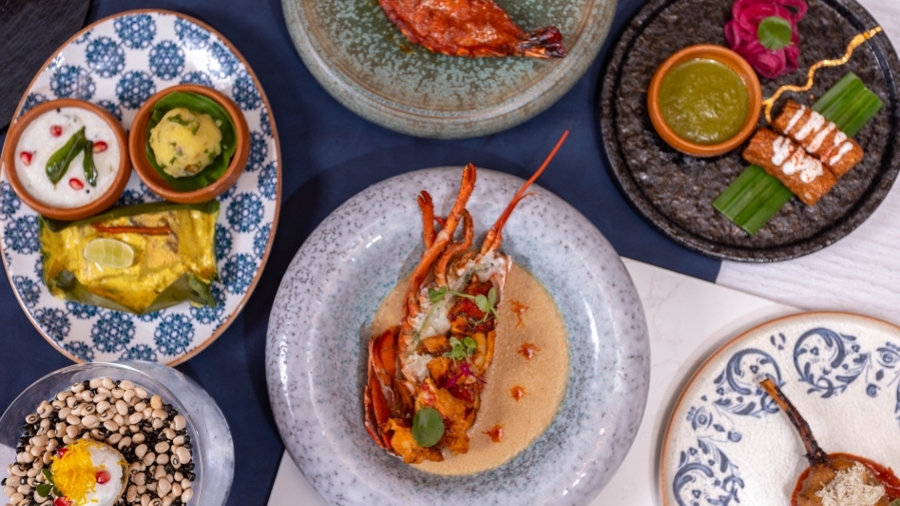
Restaurant POTONG Announces its Latest Renovation and Newest Course Menu - TRAVELINDEXBangkok, Thailand, June 09, 2026 / TRAVELINDEX / Restaurant POTONG has announced its opening after renovation on 16th June 2026. We would like to thank everyone for the tremendous support and many inquiries for booking in May. Five years after opening the doors within a 120-year-old family-owned Chinese herbal medicine building in Bangkok’s Yaowarat district, Restaurant POTONG enters a new chapter with the completion of the most ambitious renovation in the building’s history.

Since the opening in 2022, POTONG has continuously evolved while remaining deeply rooted in the heritage of the historic building that has housed generations of Chef Pichaya “Pam” Soontornyanakij’s family. Throughout the years, the restaurant has earned international recognition while building a reputation for its progressive Thai-Chinese cuisine, storytelling, and commitment to pushing culinary boundaries.

The year 2026 marks the Year of the Horse, a zodiac sign associated with forward movement, ambition, resilience, and transformation. For POTONG, it arrives as a fitting symbol of a new phase, one that embraces growth while remaining connected to the foundations that shaped its identity.

Just as the restaurant’s original opening in 2022 coincided with the Year of the Tiger, a year that held special significance for Chef Pam’s family history, this next chapter represents another milestone in POTONG’s ongoing journey of evolution.

The renovation reflects years of learning, growth, and reflection. While preserving the soul and character of the historic building, every aspect of the guest experience has been thoughtfully reconsidered to better serve both guests and team members for years to come.

The transformed restaurant now features a more intimate dining experience with only 28 seats across two dining levels, including 14 seats (with 2 dedicated seats for 1 person) on Level 2 and 14 seats (with one dedicated Private Dining Room, maximum of 10 pax) on Level 3. The reduction in capacity allows for greater comfort, improved flow, and a more personal connection between guests and the POTONG team.

Behind the scenes, significant investments have also been made in the kitchen, cellar, and operational infrastructure. The renovation was driven not only by the desire to elevate the guest experience, but also by a commitment to creating a better environment for the team responsible for bringing POTONG to life every day.

Rather than changing the restaurant’s identity, the project focuses on strengthening its foundations. The same historic building remains at the heart of the experience, now carefully renewed and prepared for the future while preserving the stories, memories, and heritage contained within its walls.

Beginning 16 June 2026, guests will be welcomed into this new era alongside an updated POTONG tasting menu. Together with our Sommelier, Chef Pam has also revisited the wine odyssey with new, unique offerings by glass, including natural, organic, biodynamic and sustainable choices.

From June through mid-November, POTONG celebrates the annual season of young tidal mud crabs from Ranong’s Andaman coast. During this limited period, guests will experience the prized seasonal roe of these exceptional crabs, highlighting one of Thailand’s most anticipated ingredients of the year.

The POTONG Tasting Menu is offered at 6,300 THB.

To commemorate the restaurant’s journey while looking toward the future, guests may also choose from two retrospective additions that revisit defining dishes from previous chapters of POTONG’s evolution.

“Legacy” Courses (2023–2024) — 2,700 THB
• Signature Rice Rolled Noodle / Caviar
• Roasted Dry-Aged Duck Neck / Marinated Foie Gras

“Revolution” Courses (2025) — 2,500 THB
• Signature Hokkaido Scallop / Milk Brioche
• 18-Hour Smoked Beef Rib / Honey Soy Glaze

These optional courses serve as a reflection on the milestones, creativity, and progression that have defined POTONG’s first five years, while setting the stage for what comes next.

To provide greater flexibility and a more personalized dining experience, POTONG will introduce an extended service schedule, with reservations available from the first seating at 3:30 PM through the final seating at 8:00 PM. The restaurant will remain open until 11:00 PM, allowing guests to enjoy the experience at a more relaxed pace.

The evening may also continue at Opium Bar, POTONG’s award-winning cocktail destination, which will remain open until 1:00 AM.

As POTONG enters its next era, its vision remains unchanged: to honor heritage, champion Thai ingredients, pursue continuous innovation, and create meaningful experiences that connect people through food, culture, and storytelling. The Team and I (Chef Pam) can’t wait to welcome everyone to our home, Restaurant POTONG.

Source

The 2nd Global Economic Forum Annual Meeting to be held in Bangkok

900 510 wttc2
The 2nd Global Economic Forum Annual Meeting to be held in Bangkok - TRAVELINDEX

The 2nd Global Economic Forum Annual Meeting to be held in Bangkok - TRAVELINDEXBangkok, Thailand, June 09, 2026 / TRAVELINDEX / The 2nd Global Economic Forum (GEF) Annual Meeting is officially set to convene from October 10th to 14th, 2026, at the premier Grande Centre Point Lumpini, Bangkok, Thailand. Under the core theme, “Shaping Resilient Economies, Advancing Sustainable Global Growth,” this landmark 5-day summit delivers a critical, high-yield advantage to the international financial elite arriving in Southeast Asia.

The Ultimate Bangkok Double-Header: Harnessing the “Olympic Event” of Global Finance

The GEF Annual Meeting 2026 is strategically positioned as the critical curtain-raiser just two days before the official launch of the prestigious Global Finance Forum week, which takes over Bangkok starting October 12th, 2026.

Widely regarded as the “Olympic event” of international development and finance, the mid-October assembly draws tens of thousands of global leaders to Thailand. For international delegates, central bankers, finance ministers, institutional investors, and global business leaders, GEF 2026 offers an unparalleled operational and networking window to maximize their presence in the capital.

Maximize Travel ROI: Arrive in Bangkok early to engage in targeted corporate, tech, and private-sector dialogues before the rigid, policy-heavy schedules of the broader ministerial assemblies begin.

The Power Framework (Oct 12–14): For delegates arriving for the start of the primary finance week, joining the GEF Masterclasses and Site Visits serves as the perfect high-level intelligence briefing. It allows attendees to preview regional market trends and solidify public-private partnerships just as the major global assemblies commence.

A Bridging Platform: While massive multilateral summits focus heavily on sovereign macroeconomic policy, GEF bridges the gap by connecting those high-level frameworks directly to corporate strategy, venture capital, technology, and actionable regional investment.

5 Days of Impact, Innovation, and Actionable Opportunities

The 5-day program seamlessly transitions from visionary cross-border dialogue to intensive, hands-on executive training.

Day 1 (10 Oct) | Forum Launch: Opening Ceremony, Plenary Sessions, Leadership Dialogues, structured Business Matching, a Networking Reception, and the prestigious Gala Dinner & Awards Ceremony.

Day 2 (11 Oct) | Broad Dialogue: Deep-dive Panel Discussions, Parallel Sessions, targeted Business Matching, and interactive Leadership Dialogues.

Days 3 to 5 (12–14 Oct) | 3-Day Intensive Masterclasses & Exclusive Site Visits: Transitioning into hands-on Executive Masterclasses across 8 Strategic Pillars, combined with onsite experiences, public-private engagement, and exclusive networking excursions, including an Innovation Visit to Thailand’s EEC (Eastern Economic Corridor).

Key Themes & High-Impact Topics

The forum’s structural framework will deeply explore cutting-edge regional and macroeconomic subjects across eight essential sectors.

Health, Wellness & Wellbeing (Asia and Global): The longevity economy, preventative healthcare tech, medical tourism hubs, and integrating traditional Eastern medicine with Western healthcare systems.

Tourism and Hospitality in Southeast Asia: Regenerative tourism, hyper-personalization via AI, luxury travel trends, and balancing cultural preservation with mass tourism.

Southeast Asia Investment and Global Capital: Navigating the “China+1” supply chain strategy, FDI inflows to ASEAN, venture capital trends, and green finance/ESG mandates.

Real Estate in Asia and Global: PropTech, blockchain integration, green building decarbonization, and affordable housing solutions.

Untouched Destinations in Asia and Global: Eco-tourism infrastructure, community-based tourism, and financing biodiversity conservation.

Smart Cities & Intelligent Infrastructure: Optimizing traffic and waste through AI-driven urban planning, integrating smart grids, and exploring Thailand’s EEC 2030 Investment & Innovation Hub.

AI & Future Education: Preparing Gen Z and Alpha for the AI economy, EdTech inclusivity in rural ASEAN, and ethical AI learning environments.

Global Trade, Geopolitics & Peace: Navigating de-globalization pressures, supply chain resilience, dealing with inflation, and defending against macroeconomic and cybersecurity threats.

An Exclusive Invitation to Global Stakeholders

The Global Economic Forum extends a formal invitation to leaders across all sectors and nations to join this high-level dialogue.

Heads of Government & State looking to align multilateral policies.
Public International Organizations & NGOs driving global developmental impact.
Banking & Finance Institutions shaping investment and next-generation fintech frameworks. Education Pioneers & Academics redesigning curricula for the future AI economy.
Global Business Leaders, Investors, & Young Business Leaders seeking high-profile joint ventures and cross-border commercial opportunities.

Step In. Take Your Place. Shape the Future.

Do not miss the opportunity to maximize your strategic reach during Bangkok’s most important economic week of the decade. Register your delegation, explore partnership opportunities, or request further booking details today. For inquiries, registration, and media credentials, contact the Secretariat directly.

Source

Middle East Disruptions and High Fuel Prices Halve Airline Industry Profitability

900 510 wttc2
Middle East Disruptions and High Fuel Prices Halve Airline Industry Profitability - TRAVELINDEX

Middle East Disruptions and High Fuel Prices Halve Airline Industry Profitability - TRAVELINDEXRio de Janeiro, Brazil, June 08, 2026 / TRAVELINDEX / The International Air Transport Association (IATA) released its latest financial outlook for the global airline industry showing a halving of profitability as a result of war-related Middle East disruptions and high fuel prices. The regional landscape, however, is highly differentiated. At the geographic center of the Middle East war, airlines in the Middle East are expected to collectively fall into the red with weak demand and operational disruptions. All other regions are expected to deliver profits, but at reduced levels from previous projections. Highlights include:

  • Airlines are expected to achieve a combined total net profit of $23.0 billion in 2026, which is roughly half the previously projected $41 billion. It is also roughly half the $45 billion net profit estimate for 2025.
  • The net profit margin is expected to be 2.0% in 2026, roughly half the previously projected 3.9%. It is also less than half the 4.2% estimate for the 2025 net profit margin.
  • Net profit per passenger transported is expected to be $4.50, half the $9.10 achieved in 2025.
  • Operating profit in 2026 is expected to be $48.0 billion (down from $76.4 billion in 2025) for a net operating margin of 4.1% (down from 7.2% in 2025).
  • Return on invested capital (ROIC) is expected to be 4.3% (down from 6.6% in 2025). This is below the 8.5% estimated weighted average cost of capital. The gap highlights again the structural weakness of the airline industry where profitability shocks quickly erode capital efficiency.
  • Total industry revenues are expected to reach $1.165 trillion in 2026 (up 9.4% on the $1.065 trillion in 2025).
  • The passenger load factor is forecast to continue to set record highs with airlines expected to fill 84.0% of all seats over the year. That is an improvement on 83.5% in 2025.
  • Passenger numbers are expected to reach 5.1 billion in 2026 (up 2.4% on 2025).
  • Cargo volumes are expected to reach 71.7 million tonnes in 2026 (up 0.2% on 2025).

“War-related disruptions in the Middle East and rising fuel costs have shifted the outlook for airlines to the worse. Globally, airlines are expected to see profitability halve compared to 2025. Profits will shrink from $45 billion in 2025 to $23 billion this year. And margins will shrink from 4.2% to 2.0%. All airline bottom lines are suffering from the rapid 70% rise in jet fuel prices. Some of the additional cost is being recuperated by adjusting prices and improving efficiency, but it will not be sufficient to maintain profitability at the previous year’s level. Smaller carriers that started the year with weak balance sheets are certainly struggling. At the regional level, all are in the black but with sharply reduced financial performance, with the exception of the Middle East. The Gulf carriers face operational uncertainty following a near complete shutdown of airspace at the outbreak of the war. These carriers are doing an amazing job maintaining connectivity, but major financial impacts are unavoidable,” said Willie Walsh, IATA’s Director General.

Even in the best of times, the airline industry as a whole suffers from low margins and returns below the cost of capital. The oil price shock has tested airline financial resilience as net margins have been squeezed to 2.0% globally.

“Airlines are bearing the brunt of the fuel price shock. While air fares are rising, airlines are still absorbing part of the hike in their bottom lines. Net profit per passenger is expected to fall to $4.50, half of what it was last year. Under the circumstances, that shows resilience. But it won’t even buy you a hot dog at most of the FIFA World Cup venues and it does not leave much of buffer should other costs or taxes start rising,” said Walsh.

Outlook Drivers

Overall revenues are expected to grow by 9.4% to $1.165 trillion. Revenue per available tonne kilometer (ATK) is expected to grow by 8.8%. Outside of the extraordinary period of the COVID recovery, an increase of this magnitude only occurred recently in 2008, when the jet fuel price rose by 40% year-on-year, and in 2010, following the 2009 global financial crisis and subsequent jump in the price of jet fuel.

Despite significant improvements, revenue growth is expected to lag operating expense growth of 13% to $1.117 trillion, halving industry-wide net profitability to $23.0 billion in 2026.

Major macro-economic factors impacting airlines are expected to deteriorate in 2026 with GDP growth reducing to 2.5% (from 3.4% in 2025), inflation rising to 5.0% (from 4.1% in 2025), and world trade growth falling to 1.9% (from 4.6% in 2025).

Revenue

– Passenger ticket revenues are expected to reach $839 billion in 2026 (+9.2% on $768 billion in 2025). Considering this outpaces expected demand growth of 2.1% (measured in RPK or revenue passenger kilometers), air fares are rising in efforts to recoup some of the costs of the oil price shock. Passenger ticket yields are expected to grow by 7% and load factors are expected to set a new record high of 84.0%.

– Ancillary and other revenues are projected to rise by 12.6%, reaching $165 billion. Rapid growth of ancillary revenue is largely reflecting airline strategies to maximize customer revenues in the face of the oil price shock. For the first time since 2019, ancillary revenues will be a larger revenue contributor than air cargo.

– Cargo revenue is forecast to reach $162 billion in 2026 (up 7.2% on $151 billion in 2025). With cargo growth measured in cargo tonne kilometers (CTK) expected to expand by just 0.7% in 2026 (and just 0.2% in terms actual cargo uplifted), revenue growth is primarily driven by airlines recouping the higher costs from the fuel price shock. Cargo yields are expected to grow by 6.5% in 2026 (after three consecutive years of decline).

Costs

– Fuel costs are expected to rise by nearly 40% from $252 billion in 2025 to $350 billion in 2026. This is based on an expected average price of crude oil at $95/barrel (Brent) for the year (up 37% from $69 in 2025). Jet fuel prices are expected to average $152/barrel for the year (up almost 70% on $90 in 2025). The crack spread (premium for jet fuel over Brent crude oil) is expected to average $57/barrel, an historic high.

Globally, airlines have hedged roughly one third of their expected fuel consumption for 2026, which helps smooth short-term cost volatility but does not eliminate exposure to sustained price increases. Furthermore, many airlines hedge against movement in crude oil prices, as this market is more liquid, which leaves them exposed to increases in the crack spread.

Total fuel consumption in 2026 is expected to remain unchanged from 2025, at 104 billion gallons. The rise in the price of jet fuel is therefore solely responsible for lifting the share of jet fuel in total operating expenses to 31.4% in 2026, up from 25.4% in 2025.

Airlines also bear the cost of compliance with the Carbon Offsetting and Reduction Scheme for International Aviation (CORSIA), estimated to be between $1.2-1.6 billion, to offset CO2 emissions in the 28.8 Mt-81.5 Mt range.

The additional cost of airline purchases of Sustainable Aviation Fuel (SAF) is expected to reach $4.3 billion in 2026 for an anticipated volume of 2.4 million tonnes of SAF being available (0.8% of total fuel consumption). This is slightly lower than previous estimates as the spread between jet fuel and SAF has dropped due to the appreciation of conventional fuel prices.

Non-fuel costs are forecast to be $767 billion (+4.0% on $737 billion in 2025), of which labor costs are the largest component ($271 billion, +4.0% on 2025). The total labor force directly employed by airlines has reached 3.33 million (1.0% growth from 2025). Productivity per employee (measured in ATK/employee) has declined slightly (-0.4%) as airlines prioritize operational resilience in the face of disruptions, particularly in light of a larger share of newly recruited staff post-pandemic.

– The shortage of renewal aircraft also generates additional costs. Aircraft lease rates have risen to record levels, reflecting limited asset availability and strong demand from airlines seeking to expand or renew fleets. The older fleets that airlines are operating require more maintenance, raising costs in this area.

– A weaker US dollar further impacts the outlook. Last year, the US dollar depreciated by around 10% against most of its trading partners’ currencies, and this year it is likely to weaken by around 5% for the year (having lost approximately 2.5% by the end of April). At the margin, this is supportive of the global business cycle as well as of non-US dollar-based airlines. All invoices, notably fuel, and all debt denominated in US dollars become cheaper for airlines operating in currencies that have appreciated against the dollar.

Risks and Constraints

– Supply chain challenges continue. Despite a gradual recovery in deliveries, supply conditions remain structurally constrained. Aircraft production is increasing but not at a sufficient pace to close the gap created during the pandemic. Deliveries remain below pre-COVID peak levels and are therefore still unable to shrink the accumulated shortfall. At the same time, demand for new aircraft remains strong, with orders continuing to exceed deliveries. As a result, the backlog reached 18,100 in May 2026, up from 17,000 in 2024 – representing over 50% of the active fleet.

Airlines have so far been able to absorb a significant share of the missing capacity through a combination of operational and commercial adjustments. Airlines have extended the life of existing aircraft, increased daily utilization and operated at higher load factors, allowing them partially to offset the impact of delayed deliveries.

The shortage not only raises costs but also caps growth. Notably, the lack of new aircraft halted gains in fuel efficiency in 2024 and 2025 for the first time in history, eliminating the airline industry’s regular progress on reducing CO2 emissions. In the current environment, with additional geopolitical disruptions affecting global supply chains, the risk is that this imbalance becomes entrenched.

– Elections bring uncertainty to the macro-economic outlook. More than 40 countries are expected to hold (or have already held) national elections in 2026, representing over 1.5 billion people worldwide and making it another pivotal year for democracy across the globe. Among the most closely watched elections are the US midterm elections in November, Brazil’s general election in October and Israel’s legislative election in October. Election outcomes will determine responses to inflation, trade tensions, as well as fiscal and monetary policy and more, as the energy crisis is reshaping government priorities across the world.

– Stagflation, the combination of slow growth and high inflation, would test industry resilience, in particular the capability of travelers to pay higher fares for an extended period of time. IATA polling gives cause for near-term confidence with 49% of respondents indicating they expect to pay more for travel over the next 12 months than they did over the past 12 months (with 43% saying they expected to spend about the same). While 83% indicated that they were more cost conscious, a similar number (86%) also said that they expect the price for transport to rise and fall reflecting developments in the oil price.

– Infrastructure constraints continue to impact the industry with rising costs and limits on growth. With insufficient infrastructure capacity available to meet demand, the war in the Middle East has become a particular concern for airport slot allocation rules. Rules enabling flexibility to avoid penalizing airlines are needed when airspace or airport closures/restrictions have limited the ability to use allocated airport slots. Similarly, economic regulators must ensure that any reduction in demand due to the war and its impacts are met with efficiency gains instead of rate increases.

Regional Roundup

Africa
Africa’s hub carriers are seeing the strongest growth in traffic as it re-routes to avoid the Middle East. However, the region’s profitability is expected to weaken as a result of cost-side vulnerabilities, particularly regarding the supply and price of fuel. Combined with typically lower aircraft utilization and weaker balance sheets, these factors will cap the revenue upside from shifting traffic flows, resulting in a lower expected net profit margin in 2026.

Any gains are likely to be concentrated among the limited number of hub carriers with established connectivity linking Africa to Europe and Asia. Smaller and more fragmented operators are expected to bear the brunt of the challenging operating environment.

Structural constraints continue. Weak infrastructure, fragmented airspace, and limited cross-border coordination reduce network efficiency and raise operating costs. In addition, limited financial capacity and access to capital restrict fleet expansion and network development.

Asia Pacific
The Asia Pacific region relies heavily on crude oil imports from the Gulf and the lack of such supplies can cause more acute pressure on refineries and create jet fuel shortages as well as higher jet fuel prices than in other regions. This environment is already prompting capacity adjustments, and longer routings, caused by airspace restrictions, lead to increased fuel burn, tighter effective capacity, and higher unit costs.

Demand fundamentals remain supportive with both domestic and international passenger traffic continuing to grow. In fact, some Asia Pacific carriers are benefitting from shifting traffic flows linked to the Middle East conflict, particularly on Europe–Asia routes. Cost pressures are amplified by the depreciation of several Asian currencies, which raises the local currency cost of US dollar-denominated expenses, most notably fuel.

Disruptions at Middle Eastern hubs have created additional opportunities for Asia-based carriers to capture cargo traffic, particularly on Europe–Asia trade lanes. However, regulatory changes in Europe, including tighter customs requirements for low-value shipments, may weigh on e-commerce volumes. Overall, while cargo growth is likely to moderate, capacity constraints and rerouting effects should keep market conditions relatively tight.

Europe
Highly reliant on Gulf imports for jet fuel, Europe is facing significant cost pressure. While some of this is mitigated thanks to a pre-crisis hedging ratio of 70% of its fuel needs, higher costs will feed through as hedges roll off.

Europe has seen some traffic gains by providing direct connectivity between Europe and Asia, replacing some travel through Gulf hubs. However, parts of Europe are still suffering from airspace restrictions over Russia. Importantly, a weakening macro-economic backdrop, with slower growth and rising energy costs, is expected to weigh on household purchasing power.

European airlines operate with cost pressures from onerous regulations, including SAF mandates, as well as elevated airport and air navigation charges. Ongoing industrial actions in several markets contribute to operational disruption and limit flexibility. These factors suggest that Europe’s competitive position could weaken yet further, even once market conditions normalize.

Latin America
Latin America’s performance is influenced by the downward pressure on several of the region’s currencies resulting from the energy crisis.

Demand conditions in Latin America remain more sensitive than in other regions, reflecting lower income levels, and a lower share of business travel in total demand for air transport. Cargo markets may soften, particularly in export-oriented markets. Structural demand drivers remain in place, however, suggesting a gradual rather than an abrupt adjustment.

Latin American airlines typically operate with limited balance sheet flexibility and higher funding costs, which restrict their ability to absorb shocks or invest in fleet and network expansion. The EBIT to net margin ratio is about four times the global average underscoring this constraint which limits airlines’ capacity to respond dynamically to shifts in demand or cost conditions. The combination of these factors suggests that the region is likely to experience a more pronounced slowdown in growth, even if demand remains positive overall.

Middle East
Sitting at the center of the shock from the war in the Middle East, the region is expected to generate a net loss in 2026. Capacity reductions, flight cancellations, operational disruptions, and elevated fuel prices are all pushing up operating expenses. Meanwhile the loss of transfer traffic is weighing on load factors and raising unit costs.

Several structural features support resilience in the region. These include a more favorable tax environment, relatively secure access to fuel supply, and comparatively low financial leverage. Moreover, its geographic position, established infrastructure, and dense network underpin long-term success.

Cargo markets in the region are also under pressure. Disruptions have reduced effective capacity and triggered a reallocation of transit cargo traffic toward other regions, weighing on financial performance.

The immediate recovery path is likely to be driven more by pricing than by a rapid return of volumes. In the longer term, structural advantages should support a recovery in traffic, although potentially at lower margins, which could reshape the economics of the hub-based model.

North America
As North American airlines have largely moved away from fuel hedging, jet fuel cost increases are transmitted more directly and rapidly into the region’s airlines’ cost bases. This creates strong incentives for immediate pricing responses to cover rapidly rising costs.

Network carriers appear better positioned than low-cost operators to deal with domestic market softness. Low cost carriers are more exposed to domestic demand and typically lack a meaningful premium offering, limiting their ability to offset cost pressures through upselling and fare segmentation.

North American airlines have delivered strong profitability in recent years and are relatively isolated from the operational shocks in the Middle East. Financial leverage, however, is comparatively high, increasing sensitivity to cost shocks, even as operating performance remains solid. Additionally, labor costs are elevated following recent wage increases.

Overall, North America is likely to see a predominantly price-driven adjustment, with widening segmentation between resilient network carriers and more constrained low-cost operators.

The Traveler’s Viewpoint

Air travel continues to deliver exceptional value to consumers. While airfares have unavoidably risen in response to higher fuel prices, the average real return air fares (in US dollars, including ancillaries) are expected to be $462, which would be 26.3% lower than in 2016.

An IATA public opinion poll conducted in April 2026 (15 countries, 6,500 respondents who have taken at least one trip in the past year) revealed that 97% of travelers expressed satisfaction with their last travel experience. Moreover, 88% agreed that air travel makes their lives better, 79% agreed that air travel is good value for money, 81% said they have lots of choices when shopping for air travel, and 88% said they cared about their ability to fly in future.

Passengers are counting on a safe, sustainable, efficient, and profitable airline industry. The IATA public opinion polling demonstrated the important role that travelers see the airline industry playing:

  • 89% agreed that air connectivity is critical to the economy
  • 88% said that air travel has a positive impact on societies, and
  • 83% said that the global air transport network is a key contributor to the UN Sustainable Development Goals (SDGs)
  • 90% hope that future generations will be able to travel by air to experience even more of the world

The air transport industry is committed to its goal of achieving net zero carbon emissions by 2050. Travelers are expressing high levels of confidence in this endeavor with 80% agreeing that the industry is demonstrating commitment to work together to achieve its ambitious goal, 76% agreeing that aviation leaders are taking the climate challenge seriously and 78% saying that they believe we will be able to fly sustainably.

The survey also revealed that traveler confidence remains high even with a proliferation of conflicts, including war. Overall, 41% said they were planning to travel more in the coming 12 months than in the previous 12 months (with an additional 52% indicating plans to travel at the same level). Some 91% said that flying is safe, with 85% saying it is safer today than ever. Travelers want to be informed with 86% saying they check government travel advisories when booking, 84% saying they are researching more before travel, 81% indicating that they are concerned about disruptions due to geopolitical conflict, and 71% saying they are booking closer to the date of travel to avoid surprises. Nonetheless, 68% indicated that they have not changed their travel habits at all.

Source

Xiamen Airlines to Host 83rd IATA AGM

900 536 wttc2
Xiamen Airlines to Host 83rd IATA AGM - TRAVELINDEX

Xiamen Airlines to Host 83rd IATA AGM - TRAVELINDEXRio de Janeiro, Brazil, June 08, 2026 / TRAVELINDEX / The International Air Transport Association (IATA) announced that Xiamen Airlines will host the 83rd IATA Annual General Meeting (AGM) and World Air Transport Summit (WATS) in Xiamen, China, from 30 May to 1 June 2027.

“We are excited to bring the 83rd IATA AGM to China, hosted by Xiamen Airlines. China is a major player in the aviation industry. China’s airlines are among the top airlines by passenger traffic in the world. And the country is at the forefront of how technology and digitalization can be deployed to improve efficiency. Hosting the AGM in China will allow the leaders of the global aviation industry to witness first-hand the impressive development of the China market,” said Willie Walsh, IATA’s Director General.

“Xiamen Airlines is proud to host the IATA AGM and to welcome our industry colleagues to our home base of Xiamen. China is a vast and culturally diverse country, with many dynamic cities and regions beyond its best-known gateways. Located on China’s southeast coast, Xiamen is an historical port and interface for commerce between China and the rest of the world,” said Zhao Dong, Chairman of Xiamen Airlines.

“The opening of Xiang’an International Airport later this year demonstrates how Xiamen is growing its importance as a transportation and business hub. AGM guests can look forward to discovering the rich culture, warm hospitality, coastal beauty, and a relaxed lifestyle that create the distinctive spirit and vitality of Xiamen,” said Xie Bing, CEO & President of Xiamen Airlines.

The decision to host the 83rd IATA AGM in China was made at the 82nd IATA AGM in Rio de Janeiro. This is the third time China will host the global gathering of aviation’s top leaders, and the first time it will be held in Xiamen. The AGM was previously held in Shanghai (2002) and Beijing (2012).

Source

DSWD, NCSC present proposed ASEAN Framework on Unlocking Silver Economy

900 591 wttc2
DSWD, NCSC present proposed ASEAN Framework on Unlocking Silver Economy - TRAVELINDEX

DSWD, NCSC present proposed ASEAN Framework on Unlocking Silver Economy - TRAVELINDEXManila, Philippines, June 08, 2026 / TRAVELINDEX / The Department of Social Welfare and Development’s (DSWD) supervised agency, the National Commission of Senior Citizens (NCSC) presented a proposed framework to improve the condition and aging population in the Association of Southeast Asian Nations (ASEAN) region.

At the last day of ASEAN High-Level Forum on Unlocking the Silver Economy on Thursday (June 4), NCSC Commissioner Camilo Gudmalin discussed how the ASEAN Framework on Unlocking the Silver Economy can help address the challenges of seeing ageing as a vulnerability and turning it into a longevity asset by ensuring that older persons will be able to continue to productively contribute towards socio-economic development.

The two-day forum is conducted by the DSWD in partnership with the United Nations Population Fund (UNFPA), the United Nations Economic and Social Commission for Asia and the Pacific (UNESCAP), and the Economic Research Institute for ASEAN and East Asia (ERIA).

“The ASEAN Framework on Unlocking the Silver Economy transforms ageing from a welfare problem into an economic and social opportunity. Anchored on a vision of security, dignity, and purpose, guided by principles of equity, inclusion, and innovation, it delivers through six pillars,” Commissioner Gudmalin explained.

The NCSC Commissioner said that the six pillars are represented by the acronym S.I.L.V.E.R, which stands for: Social protection and income security; Integrated health and care systems; Lifelong learning and productive engagement; Value creation and silver industries; Enabling age-friendly communities; and Regional cooperation.

“By 2035, this Framework promises no older person in poverty, ageing in place with dignity, productive engagement across the lifespan, ASEAN global leadership in longevity, and intergenerational solidarity,” Commissioner Gudmalin pointed out.

To ensure that the pillars will be effectively implemented in the ASEAN region, the NCSC Commissioner designed a “realistic, but ambitious” three-phase implementation approach.

For Phase 1, which is Foundation Building, Commissioner Gudmalin said that the phase will start in 2026 until 2028. “We assess the national aging situation. We build data systems. We run pilot age-friendly communities, and we train caregivers,” the NCSC noted.

Phase 2 of the implementation entails system strengthening that will run from 2028 to 2031. “We scale long-term care systems. We certify care workers. We expand health financing. We build age-friendly infrastructures,” Commissioner Gudmalin said for the second phase.

Phase 3 focuses on innovation and integration which will happen from 2031 to 2035. “We launch ASEAN-wide Age Tech ecosystems. We enable cross-border silver investments. We fully integrate ageing into ASEAN development planning. This is not a dream. This is a roadmap,” NCSC Commissioner Gudmalin added.

To monitor the implementation of the framework, the ASEAN will develop a regional dashboard on ageing, a biennial progress reporting mechanism, and a scorecard that tracks pensions, care access, digital inclusion, employment, gender equity, and disability inclusion.

Once the draft framework is refined and a concurrence from the ASEAN Senior Officials Meeting on Social Welfare and Development (SOMSWD) is secured, it will be submitted for further deliberation, refinement, and consensus-building among ASEAN Member States before its full adoption.

Source

Roberto Alvo Chairs the IATA Board of Directors

900 559 wttc2
Roberto Alvo Chairs the IATA Board of Directors - TRAVELINDEX

Roberto Alvo Chairs the IATA Board of Directors - TRAVELINDEXRio de Janeiro, Brazil, June 08, 2026 / TRAVELINDEX / The International Air Transport Association (IATA) announced that Roberto Alvo, CEO of LATAM Airlines Group, has taken up duties as Chair of the IATA Board of Directors. His one-year term began at the conclusion of the 82nd IATA Annual General Meeting in Rio de Janeiro, Brazil, on 8 June 2026.

Alvo is the 84th Chair of the IATA Board of Directors on which he has served since 2020. Alvo succeeds Luis Gallego, CEO of International Airlines Group (IAG). Gallego will continue to serve on the Board.

“Aviation is at a defining moment, with an increasingly important role in connecting people, enabling trade, and supporting economic development around the world. Chairing the IATA Board of Directors at this time is a responsibility I take with great commitment. As we navigate a more complex environment, our industry must continue working together to strengthen safety, improve efficiency, advance sustainability, and unlock the benefits of connectivity for more people and communities. I look forward to working with IATA’s members, governments, and industry partners to help ensure aviation remains a force for opportunity, resilience, and growth,” said Roberto Alvo, CEO of LATAM Airlines Group.

Alvo has over 25 years of experience in the aviation industry. He joined LAN Airlines (now LATAM Airlines Group) in 2001 and held several leadership positions across finance, commercial, and strategic functions before being appointed CEO in 2020. Shortly after becoming CEO, Alvo led LATAM through its Chapter 11 restructuring process and the challenges of the COVID-19 pandemic, overseeing the group’s successful transformation and emergence in 2022.

Under Alvo’s leadership, LATAM has strengthened its position as the leading airline group in Latin America, expanding connectivity across the region and to international markets, advancing its sustainability agenda, and delivering strong operational and financial performance. Today, LATAM serves more than 161 destinations in 27 countries and plays a key role in connecting South America within the region and with the world.

“Luis Gallego has been a diligent and tireless Chair of the IATA Board of Directors, particularly as we worked through the complex issues of modernizing IATA’s governance. I thank him personally for his great support. The Board will be in very safe hands as its leadership passes to Roberto Alvo. Having guided LATAM Airlines Group through significant challenges to record profits, he has the experience we need to help IATA meet members’ needs during challenging times. We have already seen an example of his support for IATA’s work in generously hosting and presiding over a successful AGM in Rio de Janeiro,” said Willie Walsh, IATA’s Director General.

Chair Elect and Board Appointments

IATA announced Mehmet Tevfik Nane, Chairperson of the Board of Directors, Pegasus Airlines, to serve as Chair of the Board of Directors from June 2027, following Alvo’s term. IATA also published the full list of its 32 Board members.

Source

TIA Wellness Resort Prioritizes Social Connection with New Wellbeing Experiences

900 599 wttc2

TIA Wellness Resort Prioritizes Social Connection with New Wellbeing Experiences - TRAVELINDEXDa Nang, Vietnam, June 7, 2026 / TRAVELINDEX / From self-care to social-connection, TIA Wellness Resort in Vietnam is launching new social wellness experiences that bring guests together for healing and support. From a ‘Release and Renewal Fire Ceremony’ to ‘Sound and Stillness – A Collective Resonance Ritual’, TIA is creating spaces for connection that move beyond group classes.

A 2025 report from the World Health Organization’s Commission on Social Connection highlighted how widespread and serious social isolation and loneliness is within society. The landmark report calls on all sectors to treat social health with the same level of importance as we do mental and physical health.

“Our social wellness activities provide a container for people to gather, reflect and release,” explained Ramon Imper, general manager of TIA Wellness Resort. “The experiences may be rooted in inner reflection, but going through the process with others, and under the guidance of a facilitator provides a higher level of support and a feeling of community.”

Held each week on Friday at 6pm, the 30-minute Release and Renewal Fire Ceremony invites guests to pause, reflect, and take part in a symbolic ritual of release. Guests think about what they are ready to release — any thoughts, emotions, or patterns that feel heavy or no longer serve them. They write them down and then place the paper into the fire, symbolically letting go. After that guests are invited to set a personal intention — something they wish to welcome, cultivate, or create in their lives. This intention is written down and also put in the fire, as guests engage in a ritual of transformation.

“The fire serves as a visual and energetic focal point, supporting a sense of closure, clarity, and forward movement,” said Ramon. “This shared yet deeply personal experience fosters emotional release, intention setting, and a renewed sense of lightness, allowing guests to move through their TIA journey with greater awareness and presence.”

Sound and Stillness – A Collective Resonance Ritual is a sensory-based experience that takes place in the garden of the Wellness Center. Fragrant rosewood, dense mangroves, towering ferns, taro, and vibrant parakeet flowers grow in abundance within the tropical garden. Nature is the backdrop for an immersive soundscape where wind chimes, singing bowls, and simple instruments are arranged to create sound stations. In the 30-minute session, held each Wednesday at 5pm, guests are first guided to pause, breathe, and settle into the moment, before choosing an intention or feeling that they wish to cultivate. They are then invited to play an instrument, allowing the sound and vibration to carry their intention into the shared space.

“The key is minimal structure, no performance, no group timing — just a flowing, meditative soundscape created by guests,” added Ramon. “Studies have shown that sound healing helps reduce stress, tension and anxiety while improving spiritual wellbeing.”

“We created these rituals in response to a growing need from our guests for acts of self-care that brought them together with others,” said Ramon.

Eschewing quick fixes for long term change, over the last few years TIA has added more services that support guests once they leave the resort. In 2025 they launched WELL with TIA, a wellbeing YouTube channel with yoga, breathwork, and HIIT classes for use at home.

The team have now also launched ‘Letters to Your Future Self,’ where guests come together to reflect and write a personal letter to themselves during their stay at TIA. The practice encourages guests to capture how they feel, what they are releasing, and what they wish to carry forward. During the half hour session, held each Sunday at 5pm, guests can come and go as they finish their reflection. Each letter is then collected and mailed to the guest after departure.

“This serves as a meaningful reminder of their time at TIA and the intentions they set for themselves,” said Ramon. “This act creates a lasting emotional connection that extends the wellness journey beyond the stay.”

The Release and Renewal Fire Ceremony, Sound and Stillness – A Collective Resonance Ritual, and Letters to Your Future Self are complimentary activities that have been added to the resort’s comprehensive activity schedule which includes creativity classes, HITT, yoga, and breathwork sessions.

Source